


Iranian leader warns of 'brand new' financial crisis hitting America — mocks 5% Treasury yield and $39T debt
Iran mocks U.S. 5% Treasury yield, $39T debt
Skip to main content
Live a richer life.
- News
- Investing
- Retirement
- Banking
- Mortgages
- Loans
- Insurance
- Taxes
Back
Back
Unlock exclusive content
Subscribe By signing up, you accept Moneywise Terms of Use, Subscription Agreement, and Privacy Policy.
- News
- Investing
- Retirement
- Banking
- Mortgages
- Loans
- Insurance
- Taxes
Subscribe
This is an exclusive story from our newsletter — subscribe for more
- Discounts and special offers
- Subscriber-only articles and interviews
- Breaking news and trending topics
Join 200K subscribers
Already a subscriber? Sign in.
By signing up, you accept Moneywise's Terms of Use, Subscription Agreement, and Privacy Policy.
Not interested ? Continue reading
Home
News
Economy
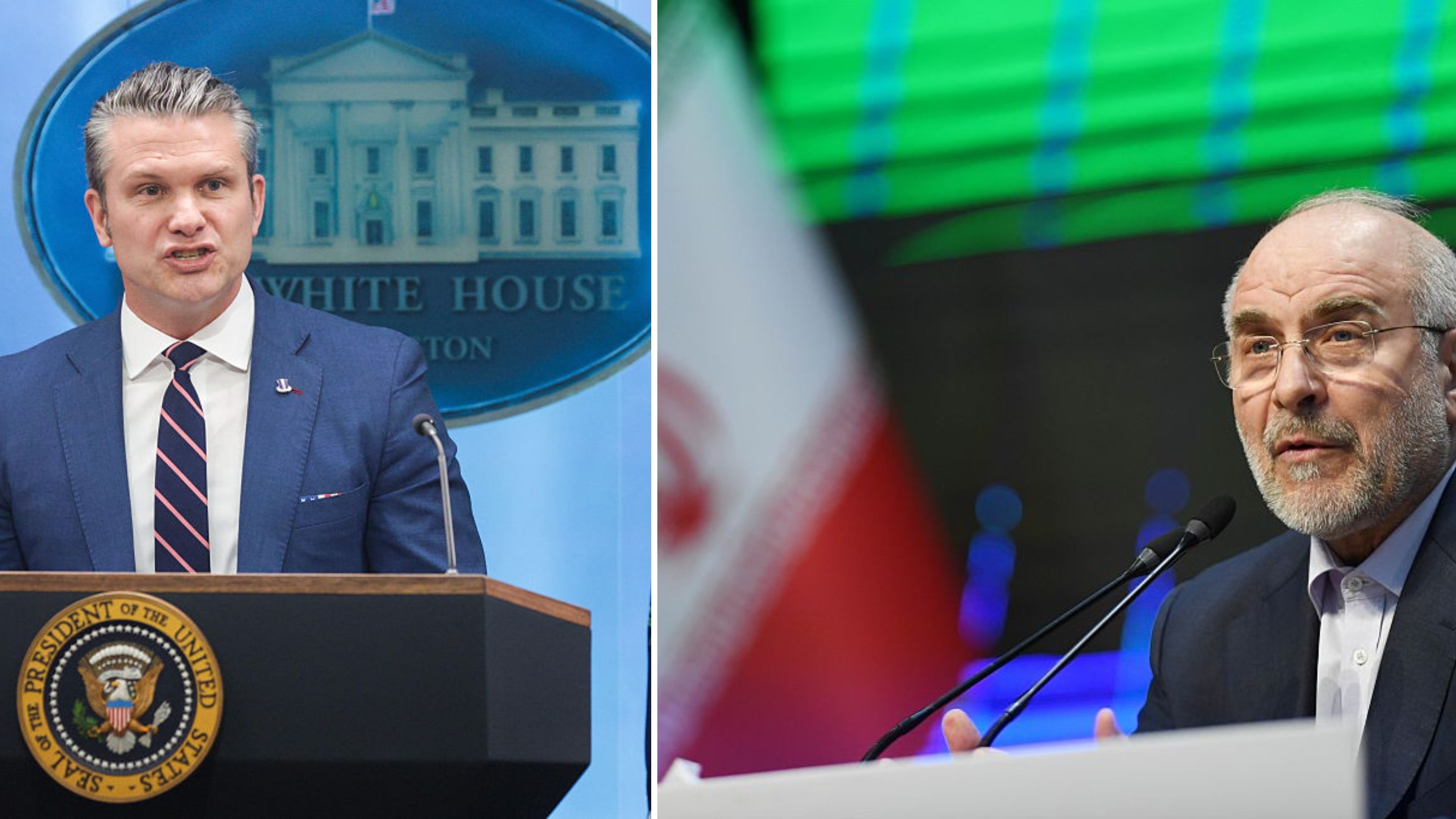
Alex Wong / Getty; Xinhua News Agency / Getty
Iranian leader warns of 'brand new' financial crisis hitting America — mocks 5% Treasury yield and $39T debt. Is your nest egg safe?
Jing Pan
May 16, 2026
Share
Copy LinkEmailFacebookXLinkedInReddit
Follow us
NewsletterInstagramFacebookTiktokXYoutube
Jing Pan
May 16, 2026
Share
Copy LinkEmailFacebookXLinkedInReddit
Follow us
NewsletterInstagramFacebookTiktokXYoutube
While we adhere to strict editorial guidelines, partners on this page may provide us earnings.
Iranian Parliament Speaker Mohammad Bagher Ghalibaf has found a new way to take aim at Washington: America's own bond market.
In a post on X, Ghalibaf shared a screenshot of a Financial Times headline reading, "US sells 30-year bonds at 5% yield for first time since 2007," and used it to mock U.S. borrowing costs, Defense Secretary Pete Hegseth and America's military role near the Strait of Hormuz (1).
Jing Pan
May 16, 2026
Share
Copy LinkEmailFacebookXLinkedInReddit
Follow us
NewsletterInstagramFacebookTiktokXYoutube
Thanks for subscribing!
Read the best of Moneywise in 5 minutes or less.
Subscribe By signing up, you accept Moneywise Terms of Use, Subscription Agreement, and Privacy Policy.
"So you're funding Hegseth the failed TV host at rates unheard of since 2007, so he can cosplay as Secretary of War in our backyard in Hormuz?" Ghalibaf wrote.
Then came the financial warning.
"You know what's crazier than $39 trillion in debt?" he added. "Paying a pre-GFC premium to fund a LARP [Live Action Role Play] and all you'll get is a brand new GFC."
GFC is shorthand for the global financial crisis — the 2008 meltdown marked by a housing bust, major bank failures, a stock market crash and a deep recession. And while Ghalibaf's post was clearly meant as a geopolitical jab, it landed at a moment when U.S. borrowing costs are already rattling investors.
The U.S. Treasury recently sold $25 billion of new 30-year bonds at a yield above 5%, the first time since 2007 that a 30-year Treasury auction carried a 5-handle, according to the Financial Times (2).
That matters because Treasury yields sit at the center of the financial system. When they rise, borrowing costs can climb for the government, corporations, mortgage borrowers and consumers alike. Treasury yields rise when bond prices fall, meaning higher yields can also signal weaker demand for U.S. debt.
And that's a growing concern when Washington is already carrying a massive tab.
The U.S. national debt now stands at $38.94 trillion — and is still increasing (3). Higher rates make that burden more expensive to service. Fortune recently reported that the U.S. Treasury is paying roughly $3 billion a day in interest alone (4).
Bond-market stress is also arriving alongside hotter inflation data. According to the Bureau of Labor Statistics, U.S. producer prices jumped 6.0% year over year in April, marking the largest 12-month increase since December 2022 (5).
And the Strait of Hormuz has become a key pressure point. Markets have been watching the waterway closely, with concerns growing that disruptions could drain global energy reserves and trigger a broader oil shock.
In other words, Ghalibaf's post may have been trolling — but it pointed to a real market fear: America is borrowing heavily at a time when inflation, oil shocks and geopolitical risks are all pushing rates higher.
And that 2007 marker is what gives Ghalibaf's "pre-GFC" taunt its sting: the last time 30-year Treasury yields reached these levels, the U.S. was on the eve of a financial crisis.
trending now
[](https://moneywise.com/news/top-stories/utah-farmer-crops-tiktok-trespassing-damage)
News •406.7k views
Utah farmer's crops destroyed by TikTokers
News •174.1k views
Homeowner disputes liability for $3.7 million storm drain
News •141.1k views
Bezos: Bottom 50% should pay zero tax
News •134.1k views
What to do if city damages your home while razing another
News •123.4k views
Jan. 6 rioters hungry for piece of Trump's $1.8 billion pie
…